


Practical Roofing Solutions for Commercial Properties
Commercial roofing work often requires a different approach to work on a residential property.
Access, building use, working areas and the potential effect on normal operations all need to be considered alongside the condition of the roof itself.
A commercial roof may develop isolated leaks that can be repaired, while older or more extensively deteriorated areas may require wider remedial work or replacement.
Our team assesses the visible roof covering and relevant surrounding details before recommending the work required. Where practical, repairs can be planned around access and the operation of the property to help keep unnecessary disruption to a minimum.
Planned Maintenance and Inspections for Commercial Roofs
In short: regular inspections let landlords, businesses and managing agents find roof defects while they are still small, spread the cost of repairs over time and avoid the disruption of an unexpected leak. Planned maintenance means dealing with those defects in order of priority rather than waiting for them to fail.
Commercial roofs tend to fail at the details rather than across the main surface, so an inspection looks closely at:
- outlets, internal gutters and box gutters, which block with leaves and silt and cause water to pond
- joints, laps and seams in the roof covering
- upstands and flashings where the roof meets walls, parapets and plant
- roof lights, vents and pipes passing through the covering
- parapet copings, edge trims and rainwater pipes
We explain what we found with photographs and set the work out in order of urgency: what needs doing now, what can be planned for later and what simply needs watching. Many owners find a check in spring and autumn, and after severe storms, keeps on top of most problems. Our roof inspections page explains what is covered, and our guide to maintaining a flat roof has practical advice for the time between visits.
Working Around Occupied Premises
Most commercial roofing takes place while the building is in use, whether that is a shop, office, warehouse or block of flats. Before work starts, we agree with you:
- when the noisier or more disruptive stages should take place, and which times to avoid
- where materials and waste will be stored and how they will be lifted to roof level
- which entrances, parking and routes must stay clear, and how areas below the work will be kept separate from staff, customers and residents
- how stock, equipment or tenants’ belongings beneath the roof will be protected while the covering is open
On larger roofs, work can be phased so that no more of the roof is stripped than can be made weathertight again before work stops each day. The roofing system matters too. Torch-on felt involves a naked flame, and some premises or their insurers set rules for hot works, so a flame-free system such as EPDM rubber or GRP fibreglass may suit some buildings better, although GRP resin has a strong smell while it cures, which is worth planning for near air intakes and open windows.
Safe Access to Commercial Roofs
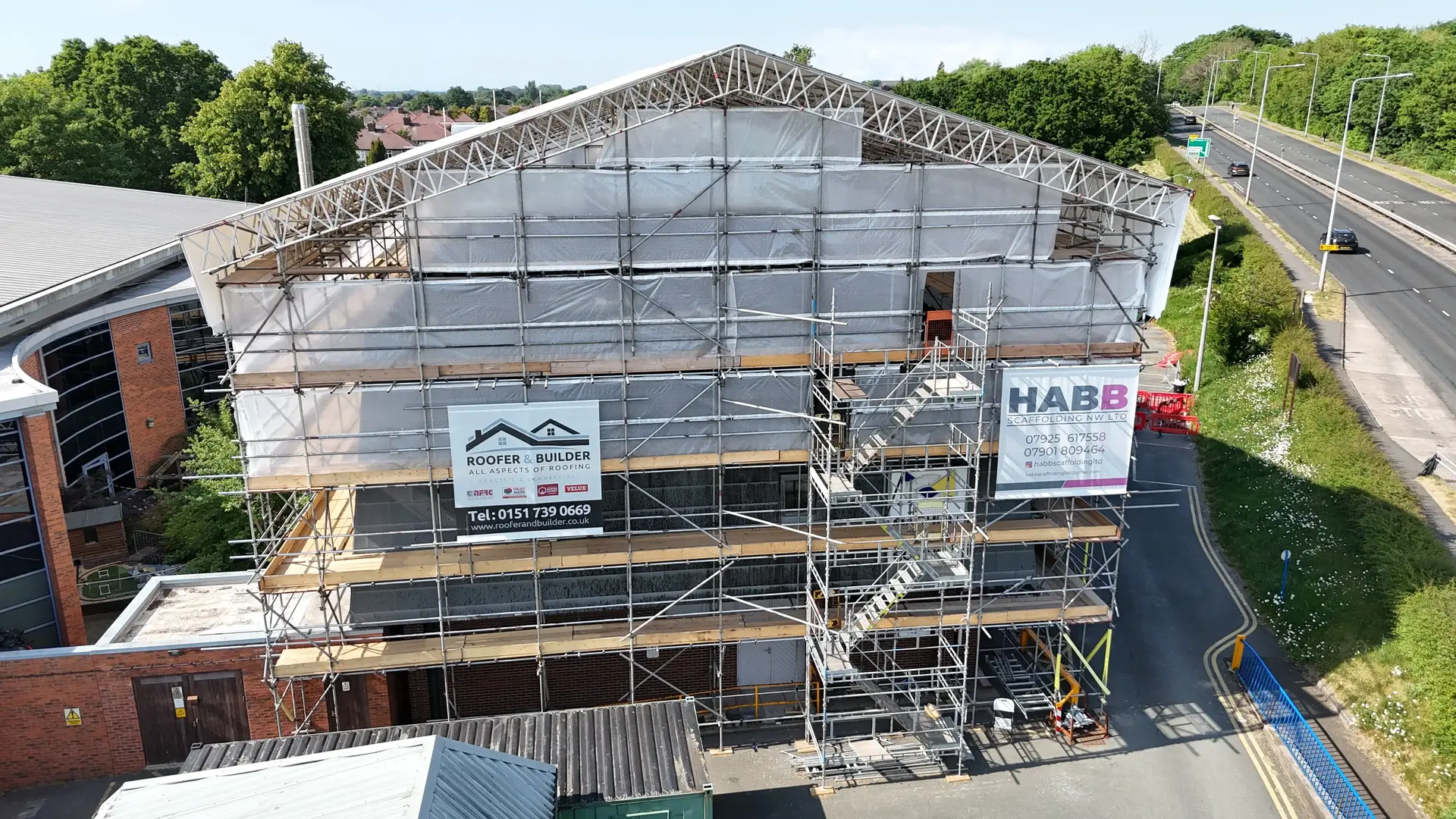
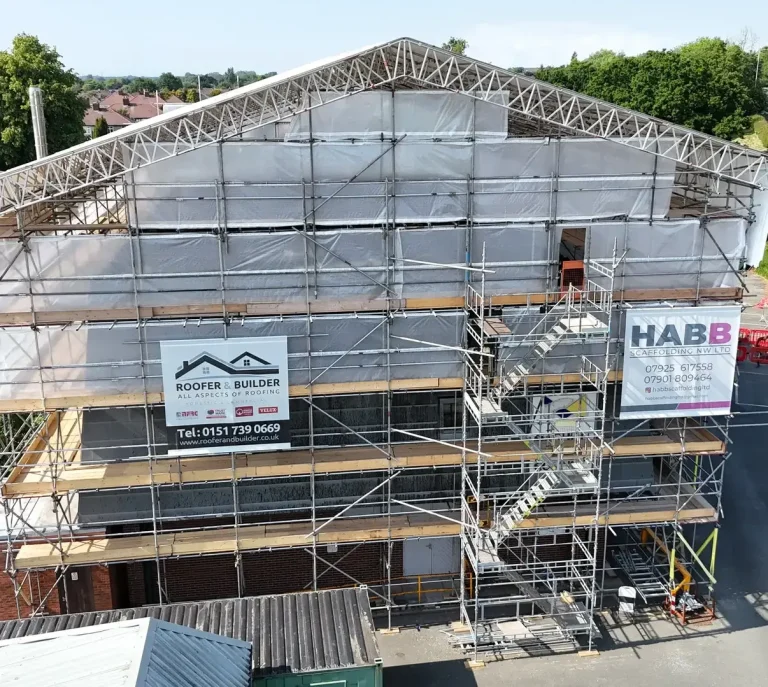
Access to every roof is planned before work starts, following HSE guidance for work at height. Depending on the building, that may mean scaffolding, towers, edge protection or other suitable equipment. Fragile surfaces are a particular concern on commercial buildings: roof lights, older fibre cement sheets and some profiled sheeting may not carry a person’s weight and must be identified and protected before anyone works nearby.
Older industrial roofs may also contain asbestos cement, so the building’s asbestos survey or register should be checked before any work that could disturb it. If you hold drawings, previous repair records or an asbestos survey for the roof, sharing them before our visit helps us plan the work safely.