
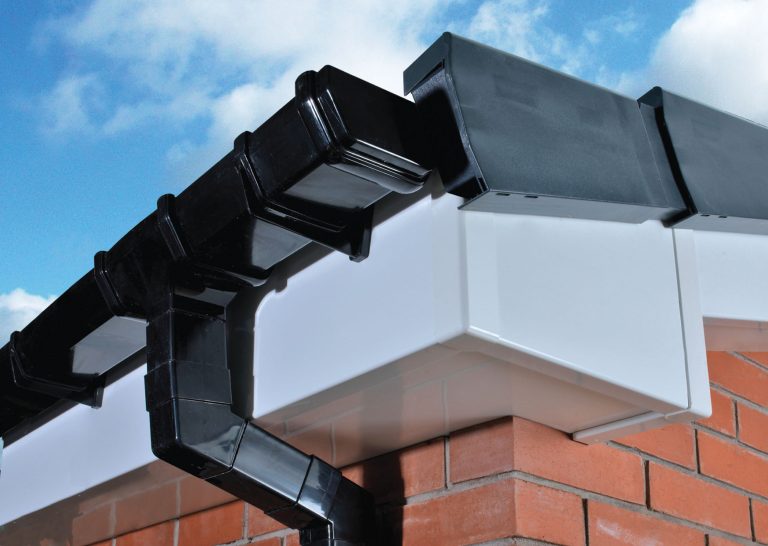





Keep Rainwater Flowing Away from Your Property
Gutters collect rainwater from the roof and direct it towards downpipes and drainage points. When sections become blocked, damaged, poorly aligned or disconnected, water can overflow or escape through failed joints.
A guttering problem may appear minor at first, but continued water exposure can stain external walls, saturate brickwork and contribute to damp around roof edges, windows and internal surfaces.
Our team will inspect the affected guttering, identify the likely cause and explain whether a local repair, realignment or replacement would provide the most appropriate solution.
Looking After Your Gutters Through the Year
In short: most guttering problems start with a blockage or a small drip that goes unnoticed. Checking the gutters at a few points in the year, and dealing with blockages and leaking joints early, helps the system last longer and protects the walls and fascias it is fixed to.
| Season | What to look out for |
|---|---|
| Autumn | Leaves from nearby trees collecting in gutters and around outlets. This is the most important time to make sure the system is clear before winter rain. |
| Winter | Overflowing in heavy rain, joints that drip more as the plastic contracts in the cold, and the weight of snow or ice pulling on brackets. Watching the gutters from a window during a downpour shows where water is escaping. |
| Spring | Moss and grit washed off the roof over winter, birds nesting near outlets, and brackets loosened by winter storms. |
| Summer | Seedlings and weeds growing in silt. Drier weather also makes this a good time to have repairs or replacement carried out. |
Never lean a ladder against plastic guttering, as it can crack or give way, and leave high-level gutters to someone with suitable access equipment. If yours are hard to reach, they can be checked as part of a roof inspection, and our guide to gutter repairs, leaks and overflow covers common faults in more detail.
Gutter Sizes, Profiles and Materials
Not every gutter is the same, and a system that keeps overflowing may simply be too small for the roof it serves. The main profiles are:
- Half round – the familiar rounded profile found on many homes, made in standard and deeper versions
- Square – a squared-off profile often used on more modern houses
- Ogee – a decorative moulded profile that suits many period properties
- Deep-flow or high-capacity – deeper sections for larger roof areas, steep slopes or where a roof valley discharges into the gutter
Most homes now have uPVC guttering, which is light and needs little upkeep. Cast iron is still found on many Victorian and Edwardian houses; it is long-lasting when kept painted but heavy, and cast iron-effect uPVC is available where the traditional look matters. Aluminium is another option. The gutter size, the number of outlets and where they sit should all suit the area of roof draining into them, so we consider all three when replacing guttering. If the boards behind the gutters are also worn, our fascias, soffits and gutters service can renew the whole roofline together.