




Keeping Roof Junctions Secure and Watertight
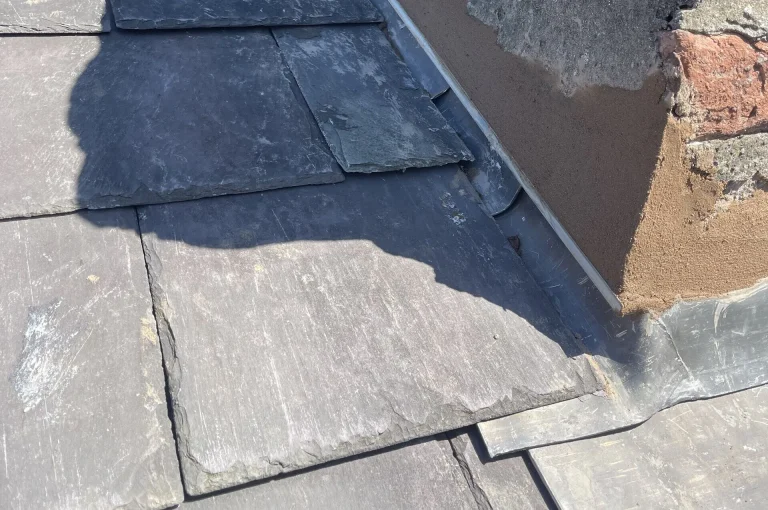
Lead flashing creates a weather-resistant junction between roofing materials and adjoining surfaces such as chimney stacks, walls, valleys and roof windows.
Over time, leadwork can become damaged by incorrect installation, restricted movement, failed fixings, building movement, storm damage or disturbance during other roofing work. Lead can also be removed or damaged through theft.
A local repair may be suitable where the defect affects a limited area and the surrounding lead remains serviceable. Where the existing material is extensively split, poorly detailed or missing, replacement may provide a more reliable solution.
We inspect the leadwork alongside the adjoining tiles, slates, masonry and roof structure before recommending the work required.
Lead Sheet Codes: Choosing the Right Thickness
In short: roofing lead is graded by code, and the higher the code, the thicker and heavier the sheet. Using the right code for each detail, and fixing it in sensible lengths, is what lets leadwork move with changes in temperature without splitting.
| Code | Approx. thickness | Typical uses |
|---|---|---|
| Code 3 | 1.3 mm | Soakers hidden beneath tiles or slates where a roof meets a wall |
| Code 4 | 1.8 mm | Step and cover flashings, soakers and smaller exposed details |
| Code 5 | 2.2 mm | Aprons, back gutters, roof valleys, wider or more exposed flashings and small bay roofs |
| Code 6 and above | 2.65 mm upwards | Larger flat and bay roofs, box and parapet gutters, and heavier-duty or heritage work |
These are general uses rather than fixed rules. The size of each piece, how exposed the roof is and how the lead has to be shaped all affect the choice, and a heavier code is often specified on exposed chimneys and valleys.
How Lead Flashings Should Be Fixed
When leadwork fails early, the cause is often how it was fitted rather than the lead itself. Good leadwork generally includes:
- flashings turned into a raked-out mortar joint, held with lead wedges and then pointed, rather than stuck to the face of the wall
- pieces kept to sensible lengths, with overlapping joints, so each piece can expand and contract on its own
- clips along free edges in exposed positions, so wind cannot lift and fold the lead back
- a coat of patination oil on new lead, which helps prevent white staining washing onto the surfaces below while the lead weathers
Self-adhesive flashing tape and sealant are useful as a temporary measure to keep water out until a proper repair can be made, but they do not replace correctly dressed lead. Our guide to lead flashing repair explains the different flashings found on a typical roof.