




Reliable Repairs for Damaged and Leaking Felt Roofs
Felt roofing is widely used on flat and low-pitched roofs, but exposure to weather, movement and general deterioration can eventually lead to splits, cracks, lifting edges and failed joints.
A visible defect does not always mean the entire roof needs to be replaced. Where the damage is localised, and the surrounding felt and roof deck remain in suitable condition, an effective repair may extend the serviceable life of the roof.
Where deterioration is more widespread, leaks are recurring, or the underlying deck has been damaged, replacing the existing roof covering may provide a more reliable long-term solution.
Our team will inspect the felt, joints, edges, outlets, upstands and accessible supporting materials before explaining the available options.
Modern Felt Roofing Systems Explained
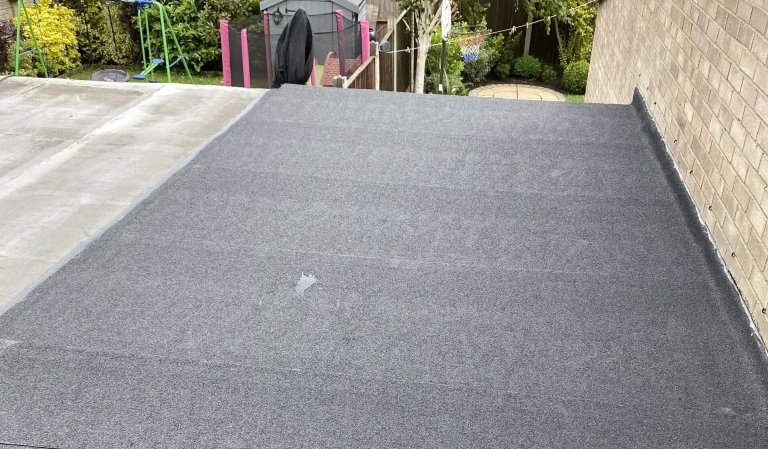
In short: a modern felt roof is built from reinforced bitumen membranes, usually laid in two or three layers and finished with a mineral-surfaced cap sheet. They have moved on considerably from the older felts still found on many garages, and on a sound deck they remain a practical, cost-effective covering.
Today’s membranes are generally made from polymer-modified bitumen on a polyester reinforcement, which helps them stay flexible in cold weather and cope with movement. A typical specification includes:
- A base layer bonded or fixed to the deck, or to the insulation on a warm roof.
- An intermediate layer on some systems, for extra thickness.
- A cap sheet with a mineral surface that shields the bitumen from sunlight and gives the finished colour.
How the layers are bonded
Torch-on membranes are softened with a gas torch so the bitumen on the underside fuses to the layer below. Cold-applied systems use adhesive, and self-adhesive membranes have a peel-off backing. Because torching uses a naked flame, industry guidance such as the NFRC’s Safe2Torch campaign asks roofers to assess each roof and use flame-free methods in higher-risk areas, for example beside timber fascias, cladding or rooflights. To compare felt with rubber and fibreglass, see our flat roofing page.
What Common Felt Defects Usually Mean
The type of damage often points to its cause, and to whether a repair will last.
- Blisters: air or moisture trapped between layers expands in warm weather and lifts the membrane. Isolated blisters can be cut out and patched; widespread blistering often means the deck is damp.
- Straight-line splits: these often follow the joints between deck boards below, where movement has stressed the felt.
- Bare, crazed patches: once the mineral chippings wear away, sunlight dries out the exposed bitumen until it cracks.
- Felt pulling away from a wall: a slumped upstand or loose flashing above it lets water run down behind the covering.
A lasting repair cuts out the damaged felt and bonds new membrane over it with generous overlaps. Brush-on sealants can buy time but rarely hold if the cause is left in place. Our article on maintaining and extending the life of a flat roof covers simple checks between repairs.
Flat Roof Felt or the Felt Under Your Tiles?
Roofing felt can mean two different things. On a flat roof, it is the waterproof covering you can see. On a pitched roof, it is the underlay beneath the tiles or slates, which acts as a secondary barrier against wind-driven rain. Torn or perished underlay is a pitched roof repair, not flat roof work. Our post on failing roof felt beneath tiles describes what to look for, and our tile roof page covers the repairs.