




Protecting the Edges of Your Roof
The roofline includes several connected components, each performing an important role.
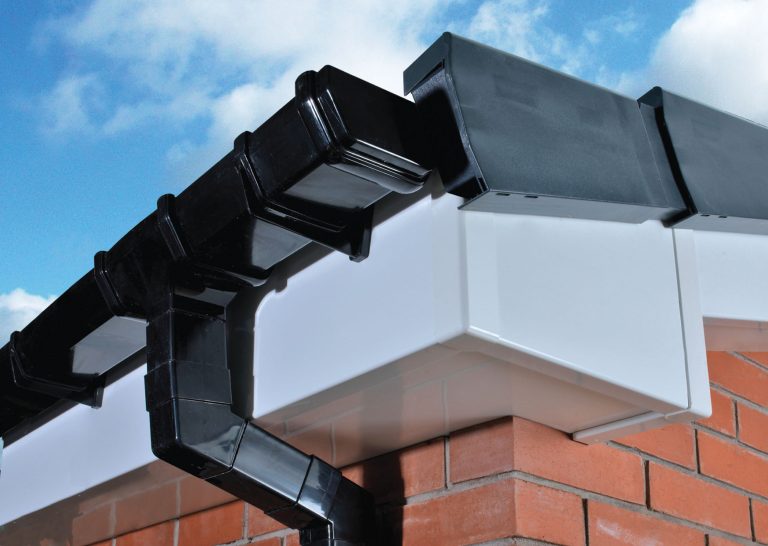
Fascia boards run along the lower edge of the roof and usually provide the fixing point for the guttering. Soffits cover the underside of the roof edge between the fascia and external wall. Gutters collect rainwater from the roof and direct it towards the downpipes and drainage system.
When one part of the roofline fails, it can affect the performance of the surrounding components. Loose gutters can damage fascia boards, while deteriorated timber and defective joints can allow water to reach the roof structure.
We inspect the complete visible roofline before recommending whether individual sections can be repaired or whether wider replacement would provide a more reliable result.
Choosing a Colour and Finish for Your Roofline
In short: uPVC fascias, soffits and bargeboards come in a range of colours and finishes, so a new roofline can match your windows and doors or change the look of the house. The most common choices are white, black, anthracite grey and woodgrain-effect foils.
- White – the most widely used finish, with a clean look that suits most homes and white windows, although it shows dirt and green algae more readily than darker colours.
- Black – gives a crisp outline to the roof and suits black-framed windows and many period terraces. Black gutters against white fascias are another popular combination.
- Anthracite grey – a modern finish, often chosen to match grey windows and doors.
- Woodgrain and foiled finishes – a textured foil laminated onto the uPVC gives the look of timber, in shades such as oak or rosewood, without the regular painting that real timber needs.
Shades and profiles vary between manufacturers, and older white uPVC can discolour over the years, so new boards fitted beside old ones may not match exactly. Coloured and foiled boards should also be fitted in line with the manufacturer’s guidance, including allowances for expansion, which matter more with darker finishes that warm up in the sun.
Vented Soffits and Airflow at the Eaves
Where a loft is insulated at ceiling level, the roof space above stays cold. Moist air from the house still finds its way up there, and without a through-flow of air it can condense on the felt and roof timbers, leading to damp, mould and eventually rot. Vents at the eaves let outside air in low down so it can move through the roof space.
Ventilation can be built into a new soffit as a continuous vent strip along its length, or as individual round or slotted vents set in at intervals, and these normally include a fine mesh to keep out birds and larger insects. Vents only work if air can get past the insulation, so rafter trays or similar spacers are often fitted at the eaves. Some modern breathable membranes are designed to need less ventilation than older bitumen felt, so the right approach depends on how your roof is built. Our article on stopping damp and mould from poor ventilation describes the warning signs, and our loft insulation service covers the inside of the roof.
What We Check Once the Old Boards Are Off
Removing the old boards gives a rare clear view of the eaves, so we check:
- Rafter ends – timber behind a leaking gutter or rotten fascia can decay and must be repaired before new boards go on
- The underlay at the eaves – old felt often perishes along its lower edge; it should finish in the gutter, and an eaves felt support tray can be fitted where it has sagged or rotted away
- The bottom course – tiles or slates should overhang the gutter by the right amount once the new fascia is in place
- Nesting birds and bats – both are protected by law, so an active nest or any sign of bats can mean the work needs retiming, and advice may be needed before the eaves are closed up
Where the felt problem runs further up the roof, our roof repairs page explains the options. If only the guttering is at fault, see our gutter repairs service.