




Why Ridge Tiles Come Loose
On many older roofs, ridge and hip tiles were held in place by mortar alone. Over the years, frost, rain and slight movement in the roof cause the mortar to crack, shrink away from the tiles and wash out. Once the bedding has gone, a heavy ridge tile is held mostly by its own weight, and a strong gust can lift it.
Gaps along the ridge also let wind-driven rain into the top of the roof, where it can soak the ridge board and top battens and show up some distance away.
The warning signs are often visible from the ground: cracked or missing mortar, tiles that look out of line, pieces of mortar in the gutter or on the path, and staining near the top of internal walls. Ridge work often goes hand in hand with other roof repairs, so we check the surrounding tiles at the same time.
Mortar-Bedded or Dry Ridge?
BS 5534:2014 (+A2:2018), the British Standard for slating and tiling, requires ridge and hip tiles to be mechanically fixed, and mortar alone is no longer considered sufficient. Both of the following meet that requirement:
- Mechanically fixed mortar-bedded ridge – keeps the traditional look, which can matter on older properties, with fixings holding each tile as well as the mortar
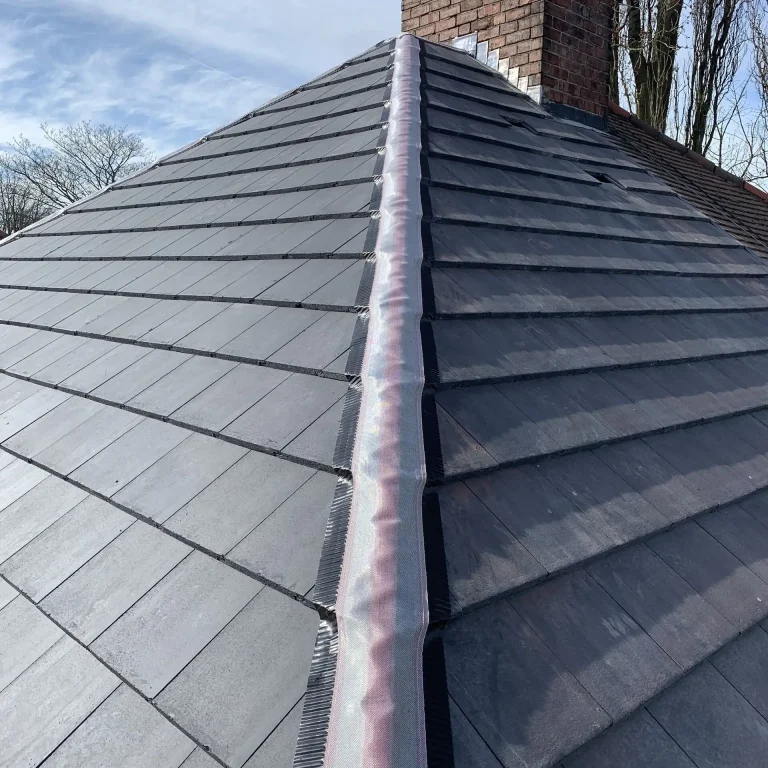
- Dry ridge system – no mortar at all, with each tile clipped or screwed down over a ridge roll
The right choice depends on the roof, the existing tiles and the look you want, and we will talk you through both before quoting.