




Emergency Roof Repairs When You Need Them
Roofing emergencies can happen without warning. Heavy rain, strong winds, fallen debris and deterioration can expose weaknesses that were not previously visible.
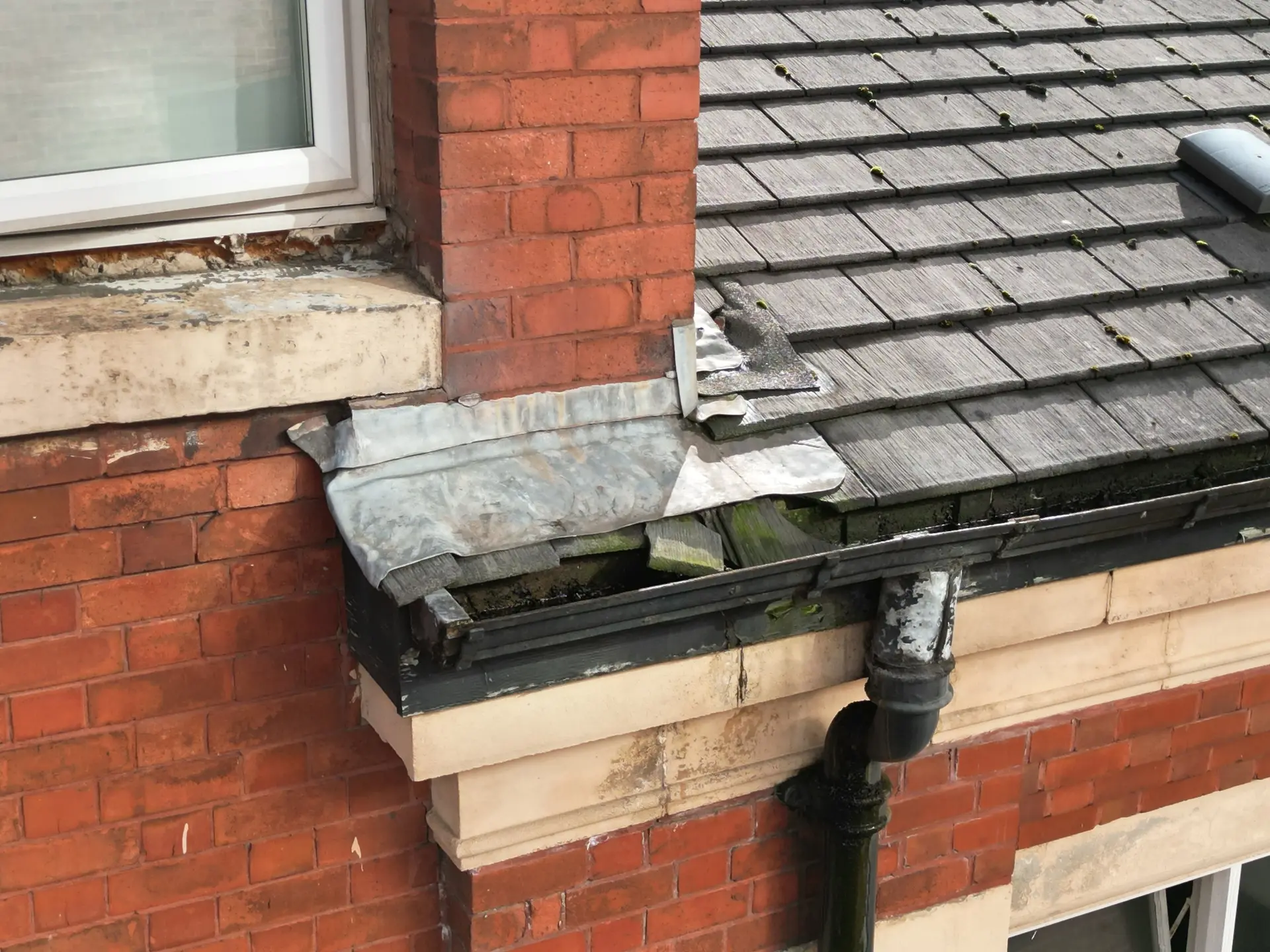
Our emergency roofers respond to urgent problems affecting pitched roofs, flat roofs, chimney stacks, leadwork, gutters and rooflines. We will inspect the affected area, identify the likely cause and recommend the most suitable way to protect your property.
Where a permanent repair cannot be completed immediately because of the weather, access requirements or material availability, we may be able to install a temporary repair to reduce further water ingress.
What to Do While You Wait for an Emergency Roofer
In short: keep people safe, keep water away from electrics, contain what is coming in and record what has happened. None of it involves going onto the roof or up a ladder.
Keep everyone safe
If tiles, slates or pieces of chimney have fallen, keep people and pets away from that side of the house. Keep clear of any ceiling that is sagging or bulging with water, as wet plasterboard can give way without warning.
Water near electrics
If water is reaching light fittings, sockets or a ceiling rose, turn off the power to that part of the house at the consumer unit, but only if the consumer unit is dry and you can reach it without passing through water. If it is wet, or you are unsure, keep away and contact an electrician. Do not use lights or appliances in the affected rooms until they have been checked.
Contain the water
- stand buckets or bowls under drips, with an old towel underneath to catch splashes
- move furniture, electrical items and anything of value out of the way, or cover it with plastic sheeting
- if the loft is safe to enter, put a container under the drip there, stepping only on boarded areas or joists
Photographs and notes
Photograph the damage indoors and, from the ground, outside. Note when the water first appeared, what the weather was doing and whether it gets worse in heavier rain. These details help us trace the cause and are useful for your insurer.
Make-Safe Now, Permanent Repair Next
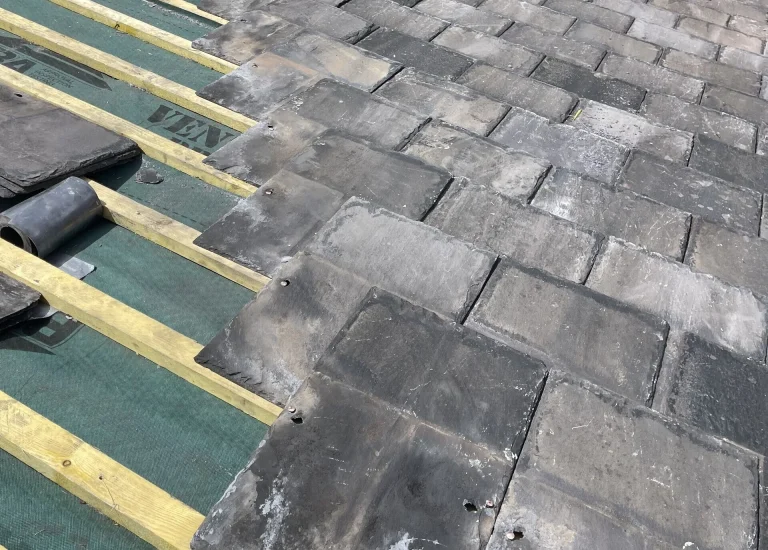
A temporary repair is there to stop the damage spreading, not to replace whatever has failed. Depending on the problem and what can be reached safely, it might mean refixing slipped tiles or slates, securing heavy-duty sheeting over an exposed area, sealing a split in a flat roof covering, taking down loose pieces that could fall, or clearing a blocked valley or outlet that is sending water the wrong way.
The permanent repair often follows on a later visit, for practical reasons:
- Dry conditions are needed. Mortar, sealants, membrane adhesives and GRP resin all need dry surfaces and suitable temperatures to bond or cure properly.
- Materials may need sourcing. Matching a tile profile or finding reclaimed slates of the right size can take time.
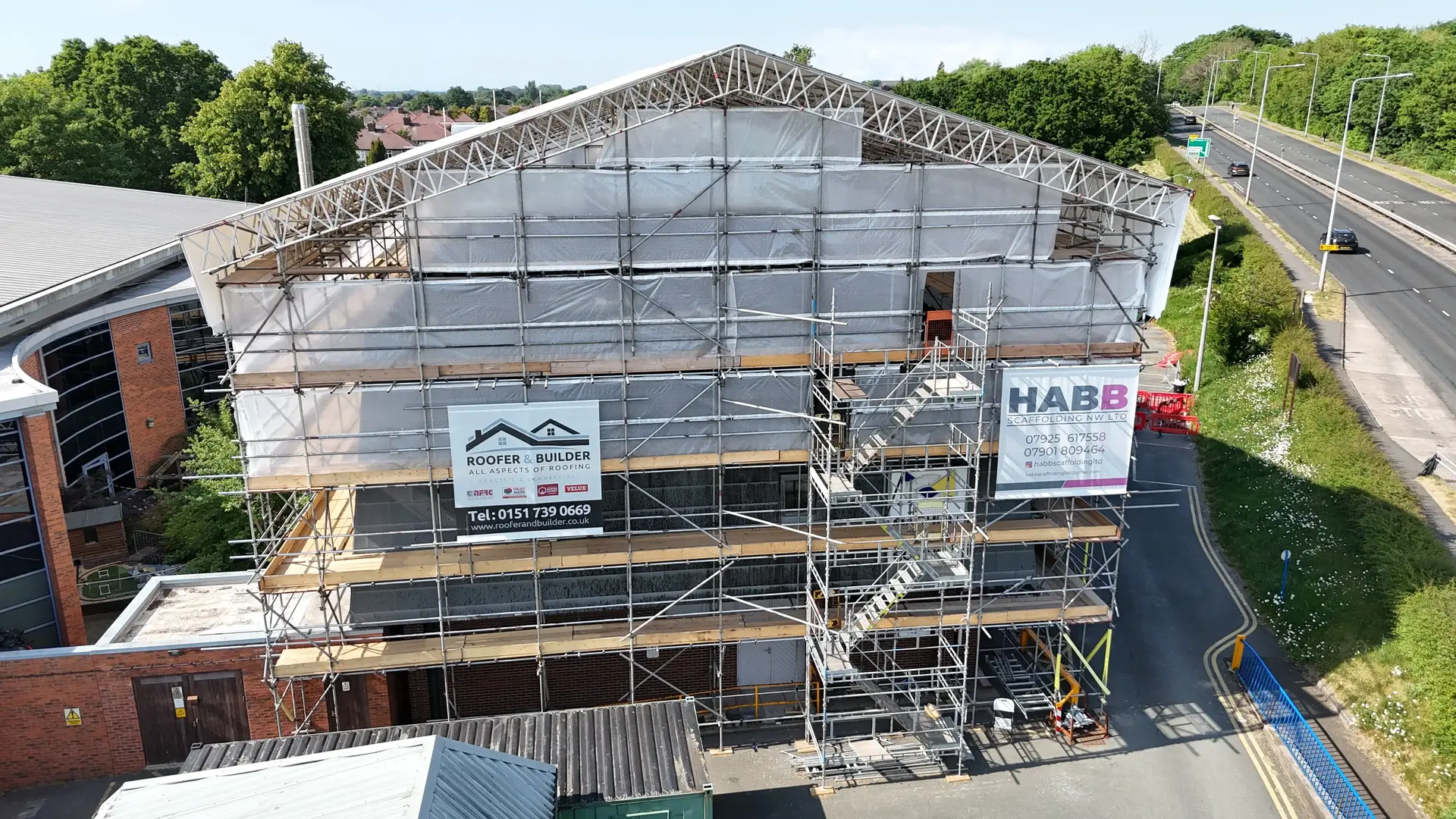
- Some areas need proper access. Chimney stacks, high gables and steep slopes may need scaffolding before they can be worked on safely.
- Hidden damage takes time to show. Rotten battens, perished felt or a soaked flat roof deck may only become clear once the area has dried out and been opened up.
Temporary measures are not built to last through months of weather, and sheeting can work loose in strong winds, so the permanent work is best arranged as soon as conditions allow. Once the roof is weathertight, wet ceilings and loft insulation can be assessed: soaked insulation often needs replacing, and plaster should be left to dry out before it is repaired. Our emergency building repairs service covers that internal making good, and our roof repairs page explains how we approach the permanent work.
Emergency Roof Damage and Your Insurance
Home insurance often covers sudden events, such as tiles blown off in a gale or a branch coming through the roof, but many policies exclude wear and tear and problems that have built up gradually. Whether a particular emergency is covered is for your insurer to decide, so contact them early and check:
- whether the policy asks you to use a particular contractor, or to get approval before permanent repairs go ahead
- what evidence they need, and keep your photographs, notes and receipts
- what the policy says about limiting further damage, as many expect you to take reasonable steps, which is one reason a temporary make-safe matters
After inspecting the roof, we can give you a written report with photographs and a quotation for the permanent work to pass to your insurer in support of a claim. The claim itself stays between you and your insurer. For damage caused by high winds, our storm damage roof repairs page has more detail.
Areas We Cover for Emergency Roofing
Our emergency line is open 24 hours a day, seven days a week, for homes and businesses in Liverpool, throughout Merseyside and Wirral, and further afield across the North West into parts of Lancashire and Cheshire. From our base in Maghull we cover Sefton towns such as Crosby, Bootle and Southport, districts across Liverpool, Knowsley and St Helens, and across the Mersey to the Wirral.
When we can attend depends on where you are, the weather and the urgent calls already in hand, so we will give you an honest picture when you ring. The full list of towns and districts is on our areas we cover page.