



Responding to Urgent Building Damage
Building damage can occur without warning and may need prompt attention to prevent the situation from becoming more serious.
Loose masonry, damaged walls, unstable chimney components and impact damage can create risks to people, surrounding property and the building itself. Water entering through damaged external areas can also affect internal finishes and structural materials.
Our team will assess the visible damage, identify the immediate priorities and explain what can reasonably be done. Depending on the situation, this may involve temporary protection, making an affected area safer or arranging the permanent repairs required.
Is the Damage Structural? Signs to Take Seriously
In short: most storm and impact damage affects the outer face of a wall, a chimney or a parapet and can be put right by rebuilding the damaged area. Some signs point to movement in the structure itself, and those need investigating before a permanent repair is planned:
- cracks that are new, getting wider, or wider at one end than the other
- stepped cracks running diagonally through the mortar joints
- a wall that is bulging, leaning or pulling away from the wall it joins
- a lintel over a door or window that has dropped, or brickwork sagging above an opening
- doors or windows that have suddenly started to stick
If we see signs like these, we will say so plainly and explain what further assessment is needed. Where new beams or supports are required, our structural steelwork and calculations service can cover the design and installation.
Making Masonry Safe and Rebuilding It to Match
Temporary work on damaged masonry varies with the problem. It may mean taking down loose bricks or a damaged chimney pot in a controlled way, supporting an opening that has been weakened, boarding over a hole left by an impact, or sheeting an exposed wall top to keep rain out of the brickwork until it can be rebuilt.
A good permanent repair should be hard to spot once it has weathered in. That usually involves:
- Matching the bricks – reclaimed bricks are often the closest match on older properties, where a new brick would stand out
- Choosing the right mortar – the mix should suit the existing masonry, and the joints around the damage may need repointing so the repair blends in
- Tying new work in – rebuilt sections are bonded or tied into the surrounding wall so the two act together
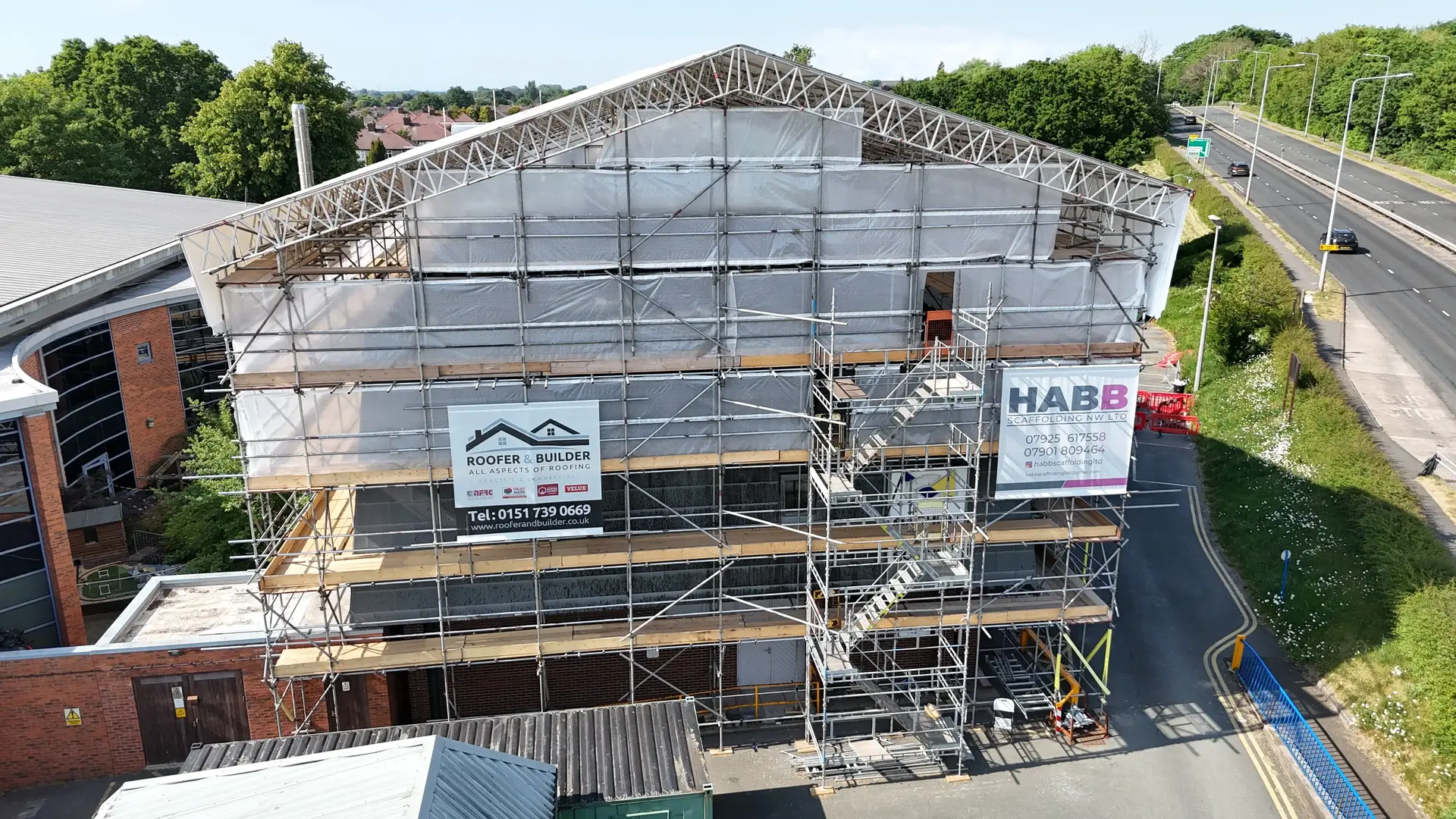
Damage at high level, such as a stack or parapet, usually needs scaffolding before it can be repaired safely. Our chimney repairs page covers rebuilding stacks, flaunching and pots in more detail.
Putting the Inside Right After Water Damage
Internal repairs should wait until the water has been stopped and the building has had time to dry. Plaster that has softened, cracked or come away from the wall may need replacing, ceilings that sagged under the weight of water often need renewing, and stains usually need sealing so they do not bleed through fresh paint. Have an electrician check any fittings that got wet before they are used again. Our internal refurbishment team can carry out the plastering and making good once the outside is weathertight, and if the water came through the roof, see our emergency roofing service.