
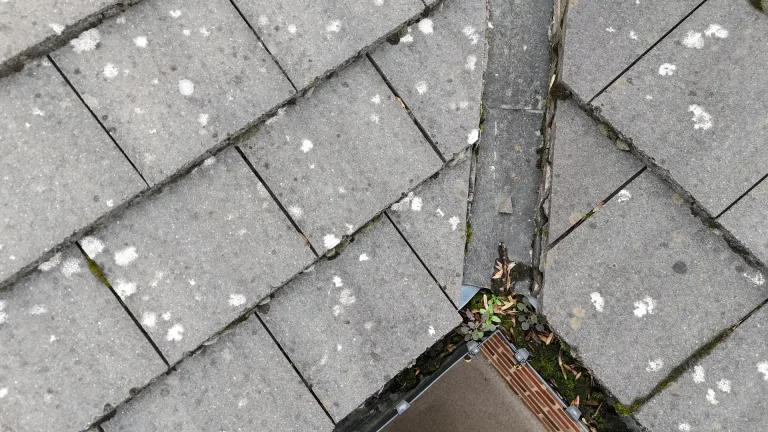





Why Roof Valleys Leak
Valleys fail for a handful of common reasons, and they often combine:
- Split or slipped lead – lead laid in lengths that are too long, or fixed incorrectly, can split as it expands and contracts, or creep down the roof over time
- Debris and moss – leaves and moss build up, hold water back and force it sideways under the tiles
- Cracked mortar – on many older roofs the cut tiles beside the valley are bedded in mortar, which cracks and washes out
- Slipped cut tiles – the small cut tiles along a valley have fewer fixing points and can slip, leaving gaps
- Worn or damaged linings – ageing valley linings, poorly lapped joints or damaged troughs can let water through
A leak from a valley may appear some distance from the valley itself, as water runs along the felt or timbers before it drips through. That is why we check the loft as well as the roof when tracing a valley leak.
Looking After Your Roof Valleys
Valleys collect whatever washes down the roof, so a little attention helps prevent leaks:
- look at the valleys from the ground or an upstairs window after autumn leaf fall and after storms
- watch for moss building up along the valley edges
- keep the gutter at the foot of each valley clear, as an overflowing gutter can push water back under the tiles
Please do not climb onto the roof to clear a valley yourself. We can clear valleys safely as part of a repair.