




Emergency Roofer in Liverpool City Centre
Roofing problems can occur without warning. Heavy rain, strong winds and sudden roof damage can result in active leaks, slipped slates, missing tiles and water entering homes or commercial properties.
Our emergency roofing service covers Liverpool City Centre, providing assistance for urgent roofing problems that require prompt attention.
Where weather conditions and safe access allow, our roofers can assess the affected area and undertake suitable temporary or permanent repair work.
If your roof has suffered sudden damage or water is actively entering your property, call our team on 0151 739 0669.
About Liverpool City Centre
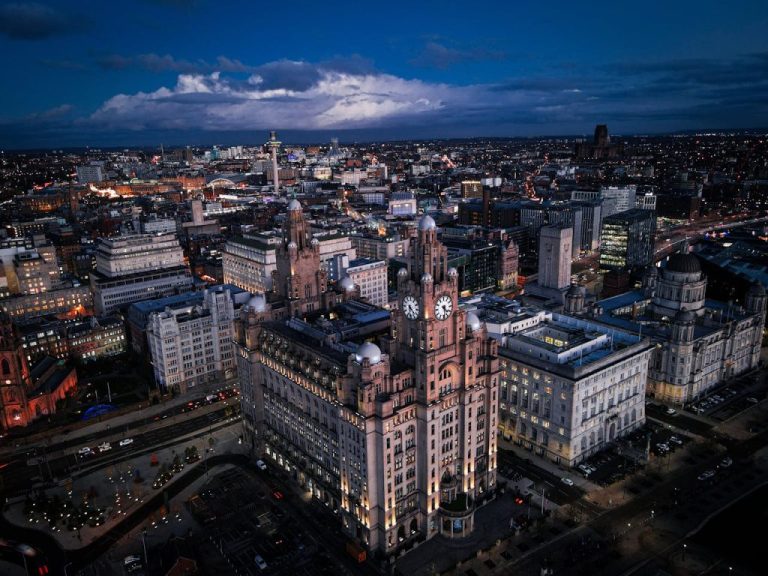
Liverpool City Centre brings together several distinctive areas, including the Waterfront, Ropewalks, Georgian Quarter, Baltic Triangle, St George’s Quarter and Cavern Quarter. Each has its own character and mix of properties.
From the historic buildings around the Georgian Quarter to former commercial and industrial buildings in areas such as Ropewalks and the Baltic Triangle, the city centre includes a varied mix of traditional and modern construction. Ropewalks itself takes its name from the area’s historic rope-making industry.
This variety of properties means roofing work can range from repairs to older slate and tiled roofs to flat roofing and maintenance work on commercial premises. Your existing Liverpool City Centre page already positions Roofer & Builder as covering both residential and commercial roofing in the area.
For those living, working or managing property in Liverpool City Centre, Roofer & Builder provides roofing and building services across the area. From an emergency roof leak to planned roofing work, contact our team to discuss the repairs or project required.
Conservation Areas and Listed Buildings in the City Centre
In short: much of Liverpool city centre is covered by conservation areas and many of its buildings are listed, so roof work can need planning checks that a suburban house would not. Confirm early whether consent is needed.
The council’s conservation areas here include Castle Street, William Brown Street, Duke Street, Rodney Street, Canning Street and Mount Pleasant, plus Albert Dock and Stanley Dock on the waterfront. Within them, external changes can need planning permission. On a listed building, listed building consent is needed for work that affects its character, such as a new roof covering or rooflights, and unauthorised work is a criminal offence. Liverpool lost its UNESCO World Heritage status in 2021, but listing and conservation area controls still apply.
Georgian Terraces and Concealed Parapet Gutters
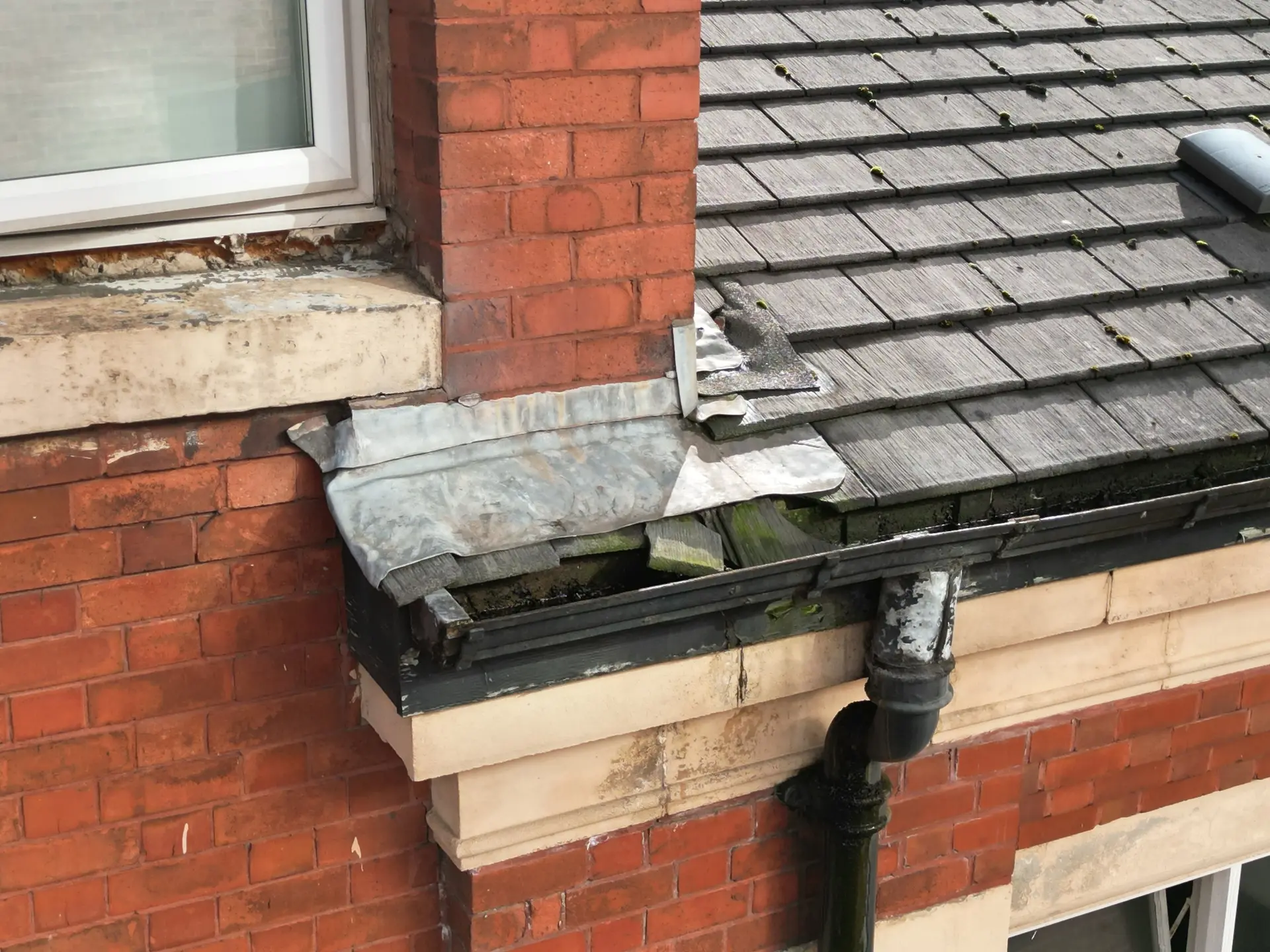
Rodney Street was laid out in the 1780s, its houses built in pairs and short runs by different builders, which is why the roof line steps up and down. Like much of the Georgian housing around Canning Street, many have slate roofs behind a front parapet, with a concealed gutter, traditionally lead-lined, along the back of the wall. Silt or a split in that gutter can go unnoticed from the street until a top-floor ceiling stains. Sound original slate is worth keeping; our slate roof page explains the options.
Flats, HMOs and Converted Buildings
Many city centre homes are flats or shared houses (HMOs) in converted Georgian houses, offices and warehouses. For most tenancies the landlord must keep the structure and exterior in repair, roof and gutters included. In a block of flats, the freeholder or management company usually arranges roof work, and leaseholders normally have to be consulted before major works above a set cost. Damp and mould are among the hazards councils assess in rented homes, so a leak above a flat needs prompt attention. A roof inspection gives landlords and managing agents a written record to plan from; see also commercial roofing. We also cover nearby Anfield and Wavertree.
Access, Scaffolding and Highway Licences
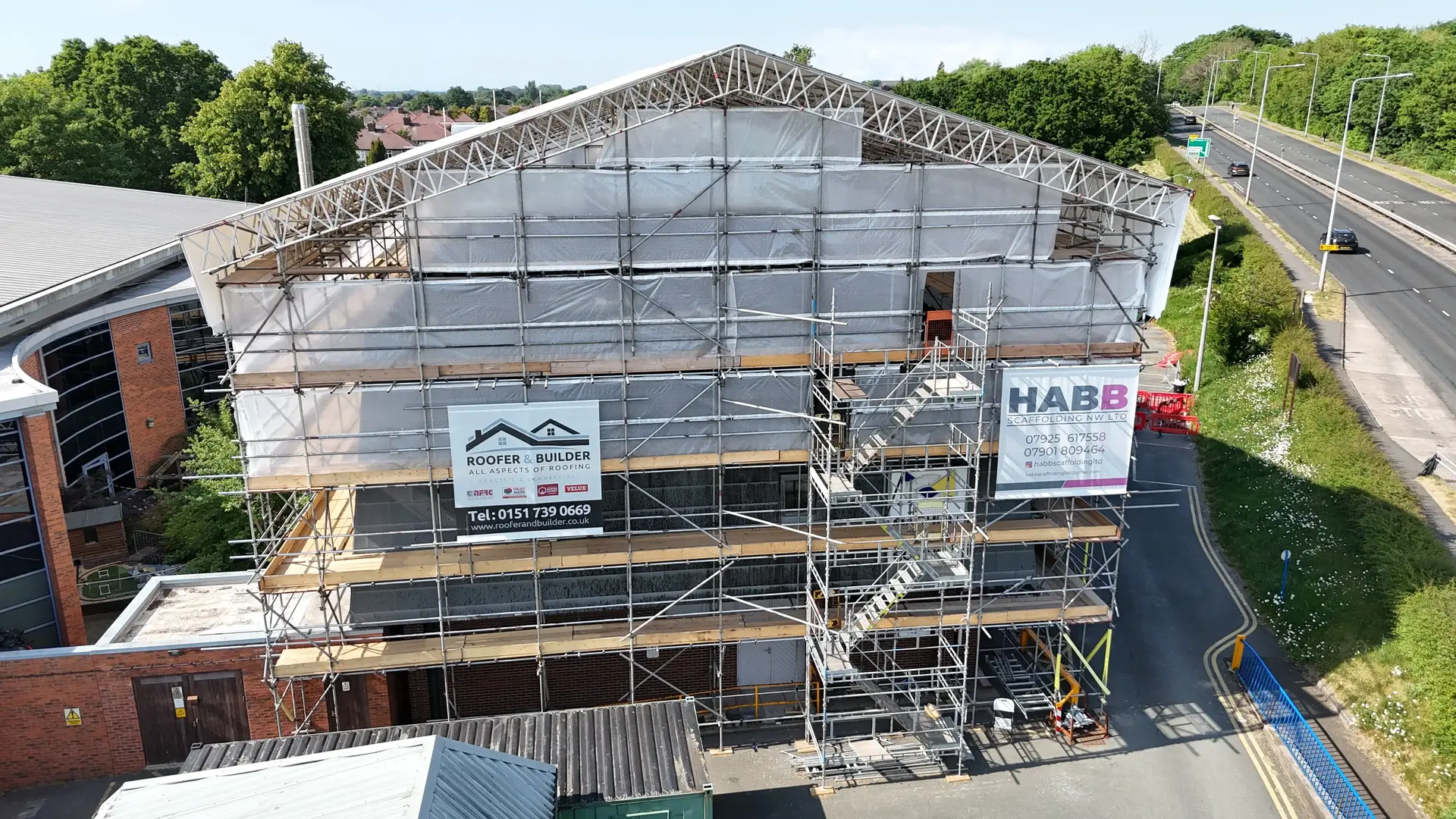
In the centre, scaffolding and access equipment usually stand on the pavement or road. Liverpool City Council requires a licence before scaffolding, hoardings, mobile elevating work platforms or containers go on the highway, and the contractor doing the work must apply. The council asks for advance notice, with a longer lead time on main roads and in the city centre; skips need a separate permit. Access is planned with edge protection under HSE guidance on working at height and agreed in advance with occupiers.
Covering Liverpool City Centre from our base at Maghull Business Centre.