




Walton's Terraced Streets
Much of Walton was built up in the late nineteenth and early twentieth centuries, and the terraces from that period still define it, from plain two-up, two-down rows to larger bay-fronted houses. Goodison Park, opened in 1892, sits right among them. Among the terraced streets off County Road, Rice Lane and Walton Vale are later semis, council housing and newer infill.
A typical Walton terrace has natural slate front and rear slopes, a chimney stack shared with the house next door, and a rear outrigger under its own smaller roof. Many of those rear roofs have been extended or rebuilt over the years, often with flat roofs.
Common Roof Problems on Walton Terraces
Slipped slates and nail fatigue
As slate nails corrode, slates start to slide out of place, usually a few at a time. Refixing them is a reasonable repair while the problem is limited; once it is happening across the whole roof, re-slating is normally better value.
Sagging roofs
Some terraces were re-covered decades ago in concrete tiles, which are heavier than slate, and on an old roof structure that extra weight can contribute to sagging or spreading. A dip in the roof line is not always dangerous, but it should be looked at. Our article on why roofs sag or bow explains the causes.
Shared chimneys
Loose pots, cracked flaunching and open joints let water into the stack and down into chimney breasts, and a shared stack needs looking after on both sides. See our chimney stack repairs.
Outriggers and back extensions
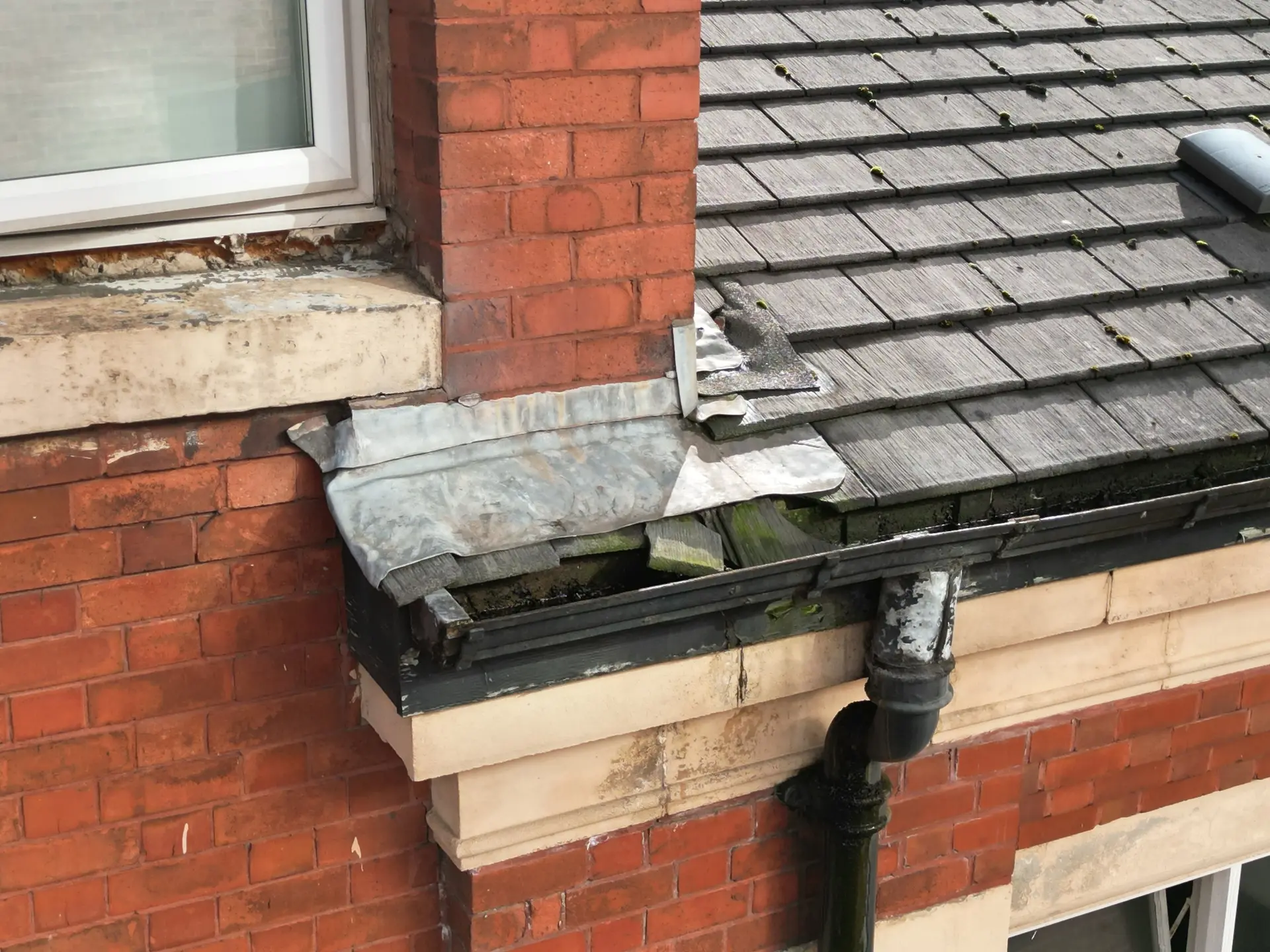
The valley or flashing where a rear roof meets the main house is one of the most common sources of leaks on a terrace, often showing as damp in a back bedroom or bathroom.
Re-Roofing a Terraced House
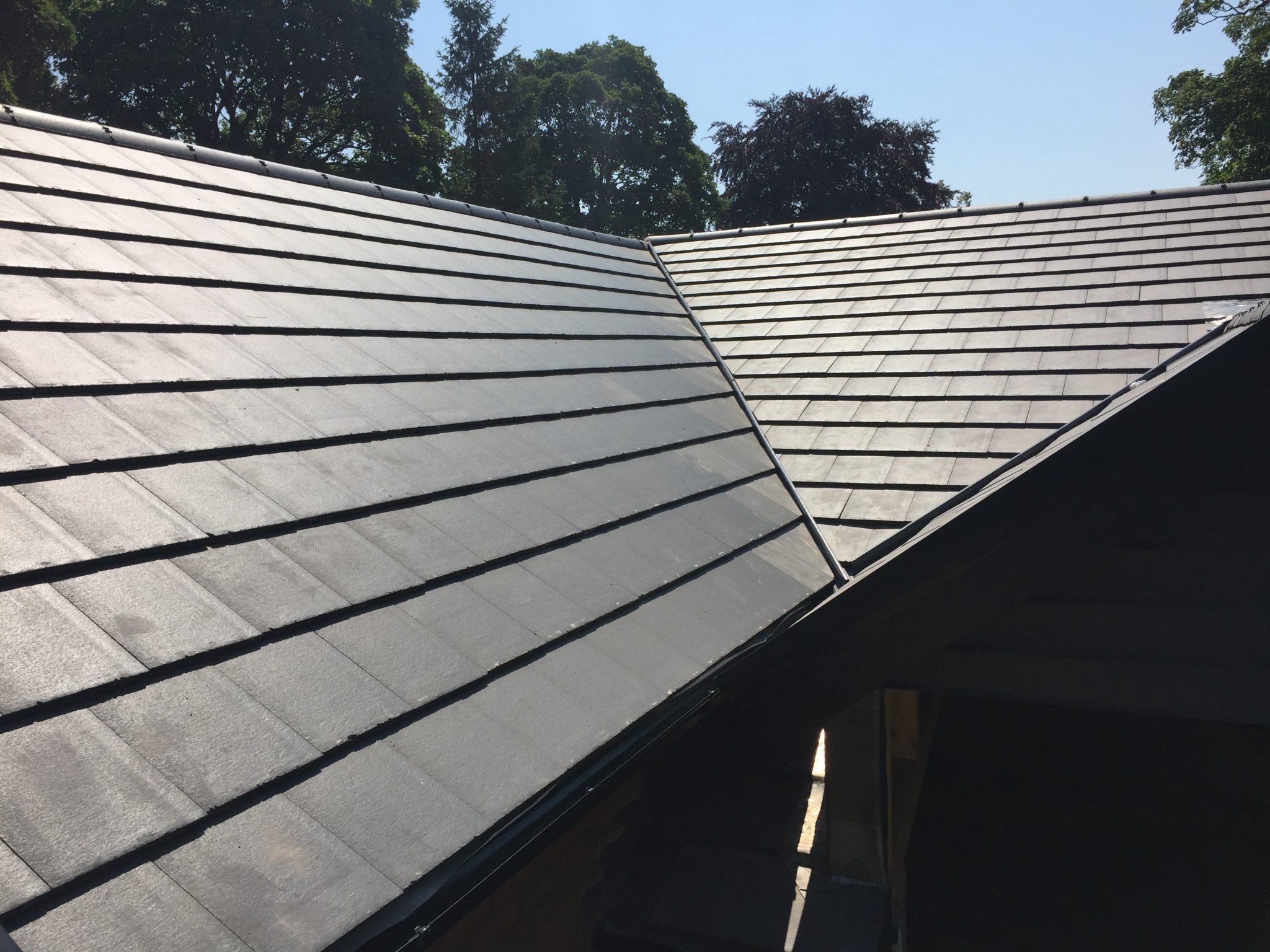
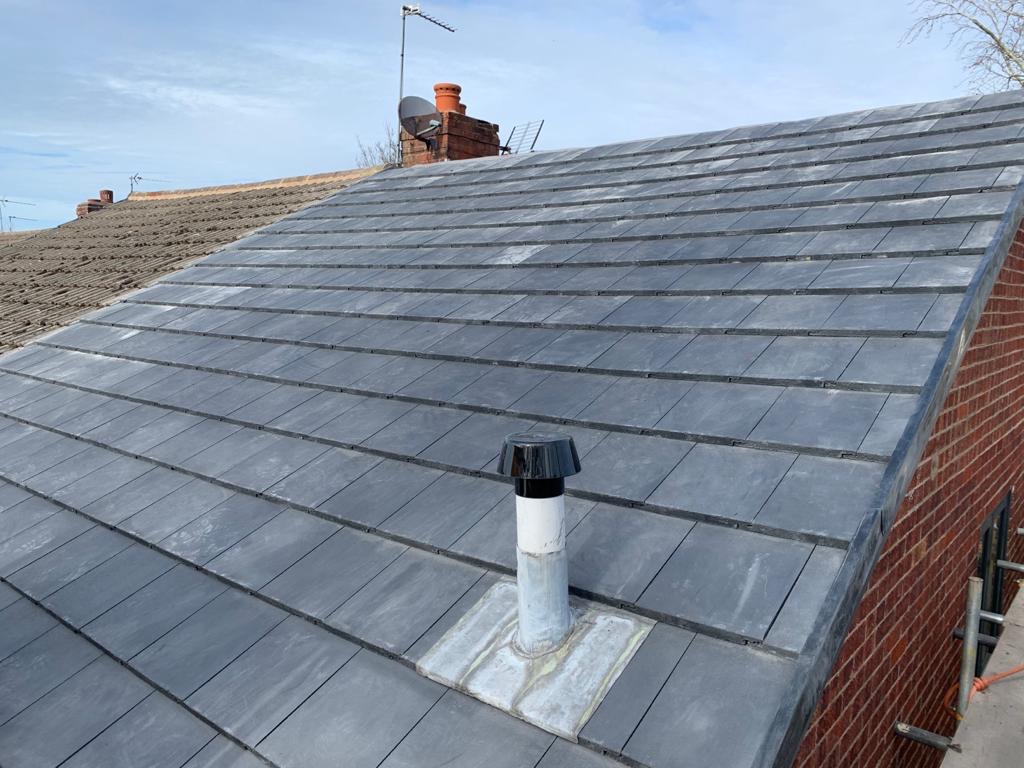
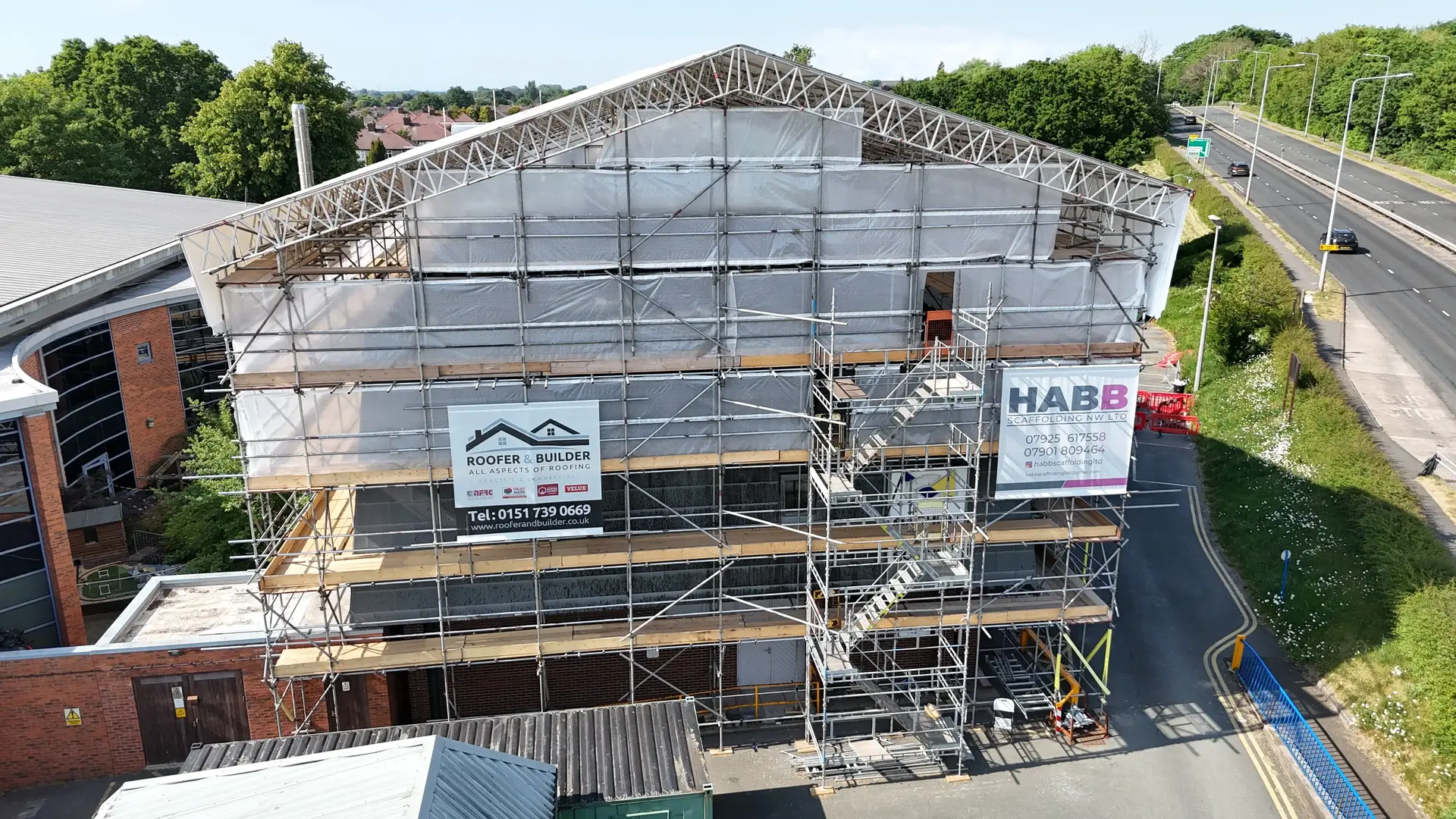
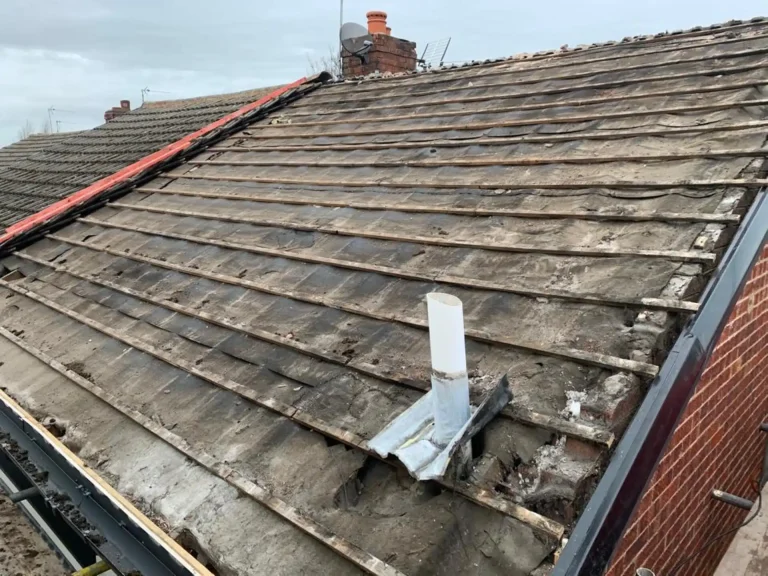
When a Walton roof has reached the end of its life, re-roofing usually means stripping the old covering, renewing the battens and fitting a breathable membrane, then re-covering in natural slate or another suitable material. It is also the moment to deal with chimneys, leadwork and ventilation in one go. On a terrace, scaffolding usually stands on the pavement, which normally needs a licence from Liverpool City Council, and the junctions with your neighbours’ roofs need careful detailing.
Replacing more than 25% of the covering counts as renovating a thermal element, so loft insulation usually has to be brought up to current standards where technically and economically feasible, and the work must be notified to Building Control. Our roof replacement page explains the process.
Landlords, Lofts and Building Work
We work for landlords and letting agents in Walton as well as owner-occupiers.
Because we are roofers and builders, we also handle the work around the roof: rear extensions, steelwork, internal refurbishment and loft conversions. On a terraced house, permitted development allows up to 40 m³ of extra roof space, subject to conditions. A loft conversion will still need Building Regulations approval, and with a party wall on each side of a mid-terrace, the Party Wall etc. Act 1996 will usually apply.
Emergency Roof Repairs in Walton
If wind has brought slates down, a chimney pot is loose or water is coming through a ceiling, call 0151 739 0669. Our emergency line is available 24/7. If it can be done safely, we weatherproof the damaged area first and come back for the full repair. After storm damage, photograph what you can and tell your insurer; we can put together a written report, photos and a quote to support the claim. More on our emergency roofing page.
Covering Walton from our base at Maghull Business Centre.